The need
Multiple breeds and possible products need an organized public presentation.
Structured breed and product information helps customers understand the flock and possible offerings without relying on scattered posts.

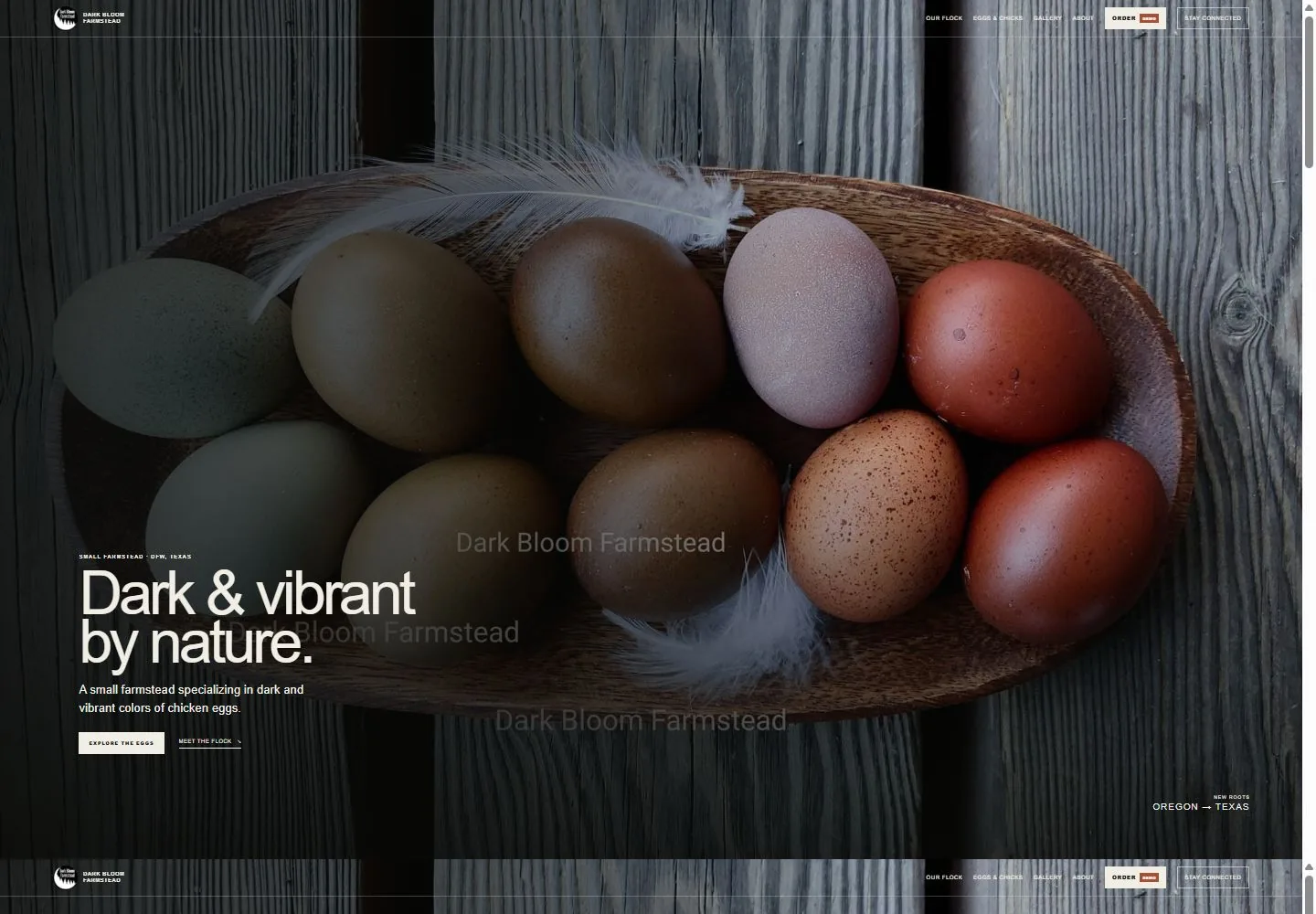
I started by building Dark Bloom Farmstead a real home online. As I worked through what the business would need when ordering returns, the site grew into a lightweight system for handling orders, customers, availability, waitlists, expenses, and the other details that are easy to lose across messages and notes.
Interactive case study
Choose the part of the project you want to inspect. The complete case study continues below.
Public Experience
Seasonal customer information
The public experience and owner controls keep product, breed, availability, and waitlist information connected while ordering remains closed.
The need
Structured breed and product information helps customers understand the flock and possible offerings without relying on scattered posts.
Customer demand
Opening Alerts separates customer interest from an open order form and keeps the owner in control of confirmed notifications.
The need
The opt-in concept lets a customer choose Orders Open, Waitlist Open, or Both rather than receiving unrelated notices.
Protected owner system · Safe demo
Privacy-safe demo views show how the system can organize day-to-day work when Dark Bloom is ready to use it.
The need
Waitlist and Opening Alerts organize customer interest while ordering remains seasonal and owner-controlled.
Problem → solution
Owner-controlled availability and ordering states keep the public experience truthful as conditions change.
01 · Farm needs
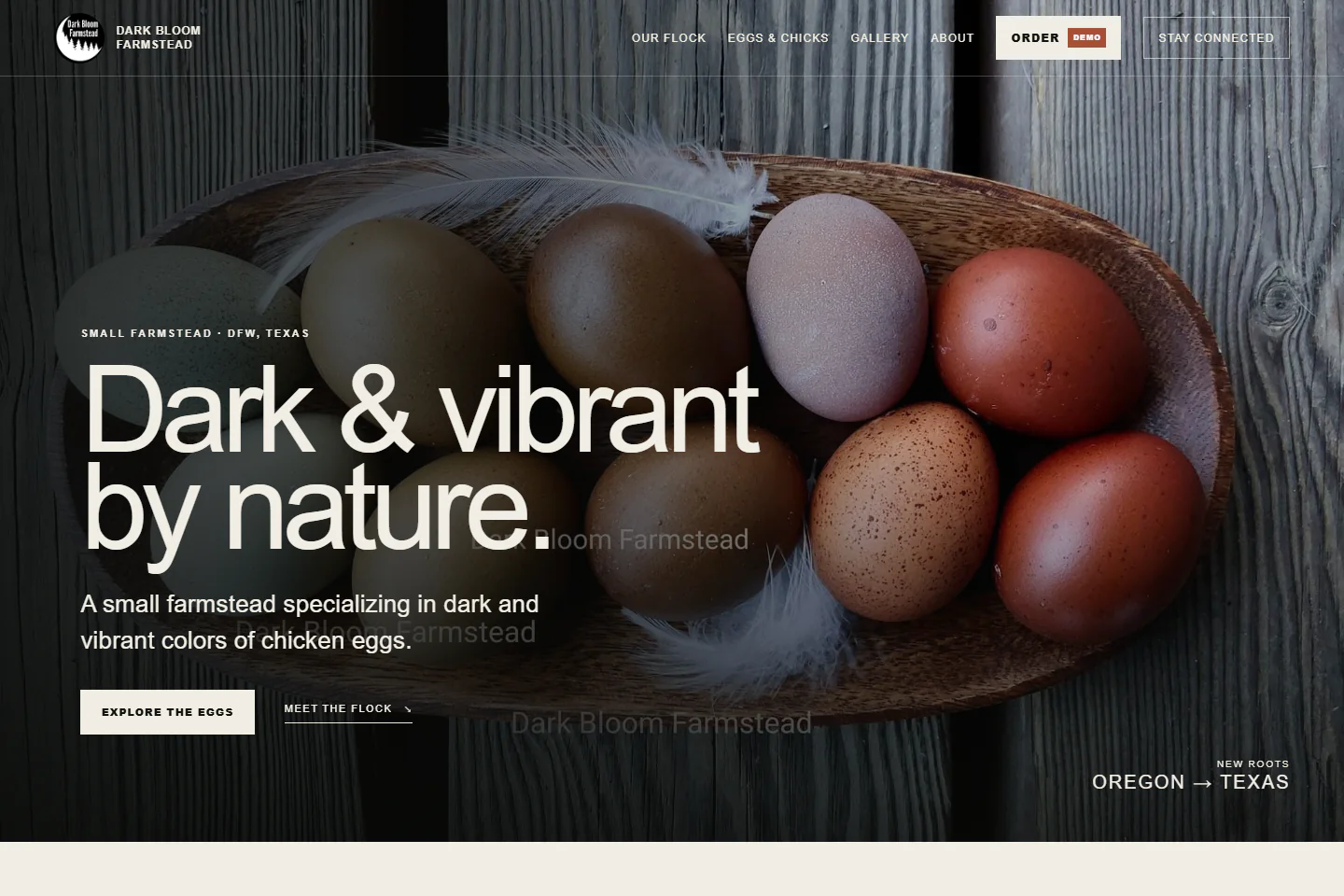
The project began with the real need to explain Dark Bloom, its move to Texas, and the products and breeds connected to the business.
A similar problem, not a copied system
Hands in the Smoke would not copy a farmstead system onto another business. The work starts with the information, seasonal decisions, and repeated tasks your operation actually needs help with.
Full case study
Continue through the complete project story.
Project snapshot
The challenge and direction
The main challenge was letting the project grow without adding features just for the sake of it. Each addition needed to solve a real problem, whether that was customers checking their own order, keeping availability organized, or giving the owner control over routine updates.
The project began as a public website. The business tools came later as I recognized jobs the site could take off the owner’s plate. I kept the public ordering path in demo mode and separated test activity so the owner could explore the system without affecting real records, sending customer messages, or charging anyone.
The customer experience
The public experience gives Dark Bloom a distinctive home for its farm identity, breeds, possible products, seasonal context, and Opening Alerts.
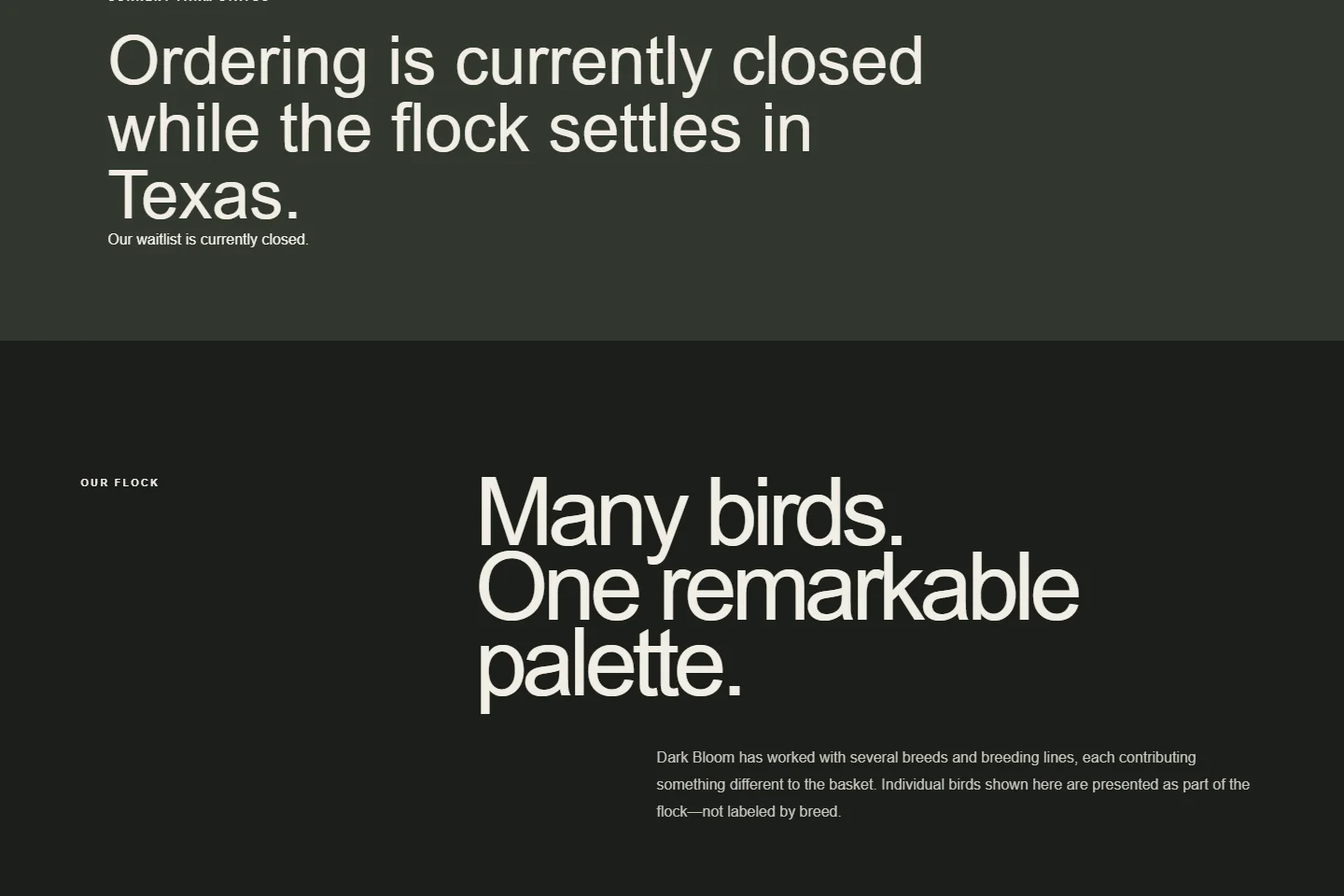
Ordering remains clearly closed while the farmstead settles in Texas. Public proof demonstrates the structure without presenting preview functionality as active commerce.
The owner’s system
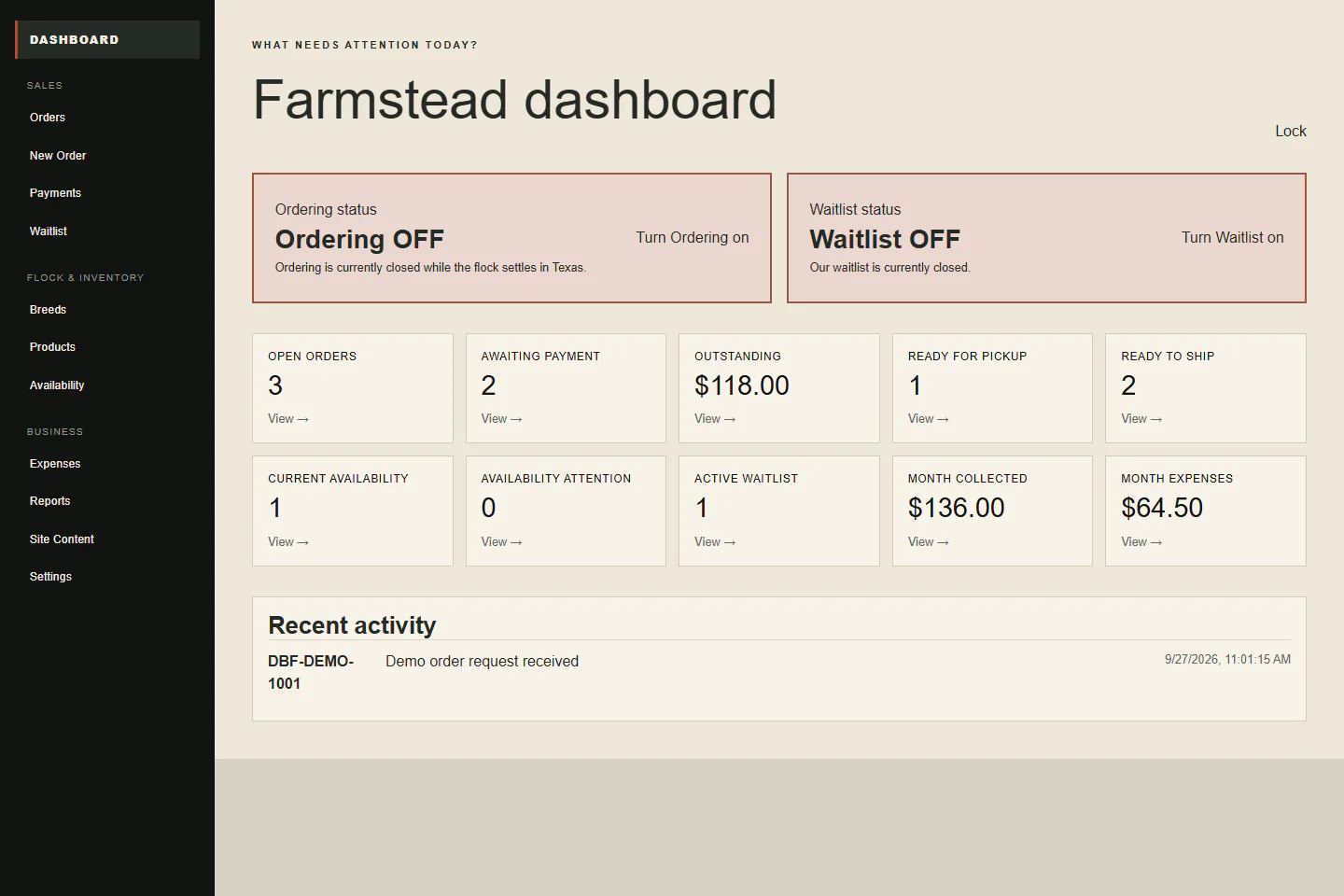
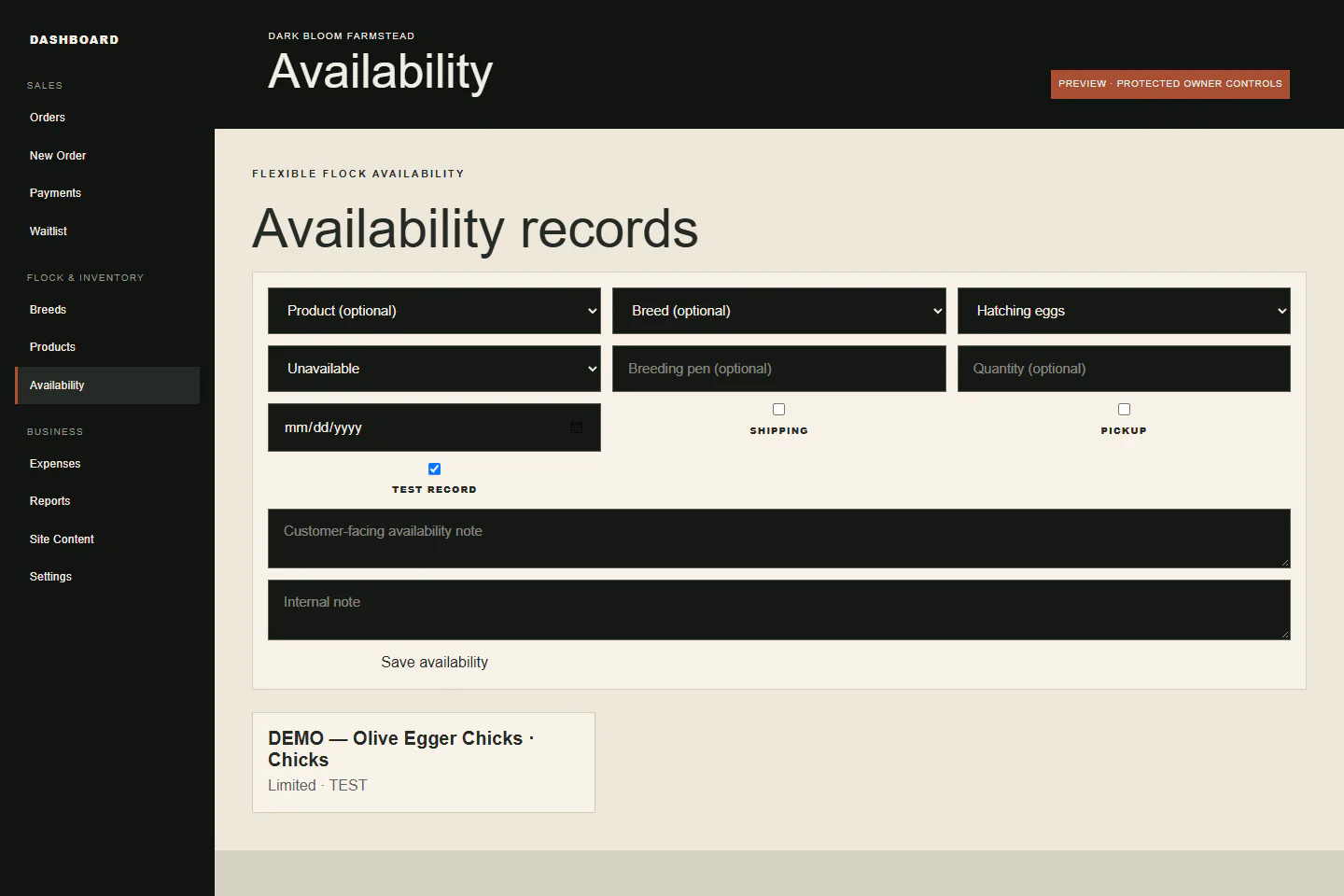
The site moved from an informational farmstead website to a public site plus an owner-facing business system. Orders, manual entry, payments, products, breeds, availability, waitlists, expenses, reports, and internal order details were added as the operating needs became clearer.
Privacy-safe owner views show how products, breeds, availability, waitlist interest, reports, public content, and appropriate settings can live in one protected workspace.
Important decisions and lessons
A website can do more than present information. Once I understood the repeated work behind the business, parts of the site became useful tools instead of more pages.
The software has to fit the business. Dark Bloom is still settling into Texas, so the right choice was to let the owner explore the system without expecting an immediate change in how she works.
Owner independence matters. Routine updates such as products, breeds, availability, orders, and waitlist information should not require paying a developer every time something changes.
Where the project stands
Dark Bloom now has a distinctive public website and a safe demo of the system that could support the business when ordering resumes. The owner can explore it at her own pace. Routine updates can be handled through the admin area, while larger website or system changes can still come back to me when they are actually needed.
A similar problem, not a copied system
Hands in the Smoke would not copy a farmstead system onto another business. The work starts with the information, seasonal decisions, and repeated tasks your operation actually needs help with.